
The capacity of Italy’s energy storage market doubled in the first half of the year, despite a slowdown in the second quarter for the first time in nine quarters, and this is likely to be repeated in the second half of the year, according to the country’s renewable energy trade body.
According to ANIE Rinnovabili, the national trade body representing the renewable and clean energy sector, a total of 3,045MW and 4,893MWh of energy storage was installed in Italy as of June 30, 2023.
Around half of these (1,468MW/2,058MWh) were deployed in the first half of 2023 alone, meaning the sector doubled in size from the end of 2022 to the end of the first half.
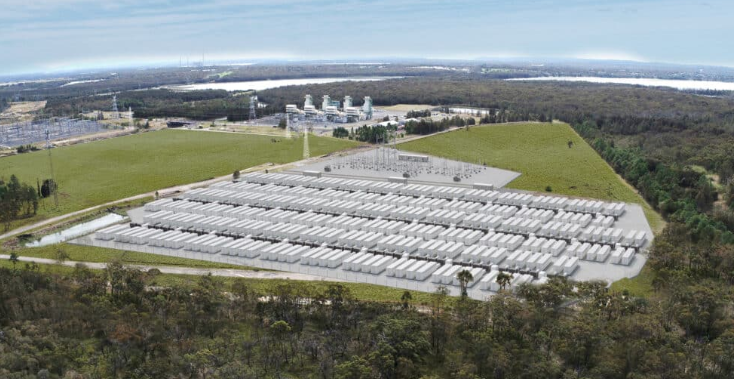
The market continues to be dominated by the residential and commercial sectors, with the grid-scale market set to take off in the next few years, but still awaiting final regulations on how energy storage will participate in the electricity market run by grid operator Terna.
ANIE Rinnovabili said that three large projects did come online in Italy during the period, totaling around 50MW, including a 15MW project in Eni Plenitude, Sardinia, a 28.8MW project in Umbria and a 7MW project in Lazio. But there is more to come, as Energy-Storage.news explores in a feature in Volume 35 of PV Tech Power, Solar Media’s quarterly technology magazine for the downstream solar and storage industry.
Despite growth in the first half of the year, deployments declined sequentially in the second quarter for the first time in nine quarters. Approximately 676 MW of capacity was installed in the second quarter, down nearly 15 percent from 792 MW in the first quarter and somewhat of a quarterly record for installed capacity. Feed-in capacity fell 20% sequentially to 914 MWh in the second quarter.
ANIE Rinnovabili attributed the sharp growth in the first quarter and the decline in the second quarter to the phasing out of the “super bonus,” a tax credit for home energy improvements that covers residential energy storage systems and has boosted residential energy growth The Italian market is second only to Germany.
The trade body expects the downturn in the residential and commercial sectors to continue into the second half of the year as well, but said the utility-scale sector may begin to make up some of the difference.
Jon Ferris, head of flexibility and storage at LCP Delta’s research and consulting practice, commented on this on Energy-Storage.news:
“We expected a slowdown in residential installations as the Super Bonus came to an end, but our forecast was blown away by the unprecedented growth in installations in Q4 2022 extending into 2023. It is not surprising that this has not continued.
“Pre-meter batteries will pick up as projects supported by the Capacity Market Auction begin to come online, with 21 projects delivering 1GW by the end of 2023.”
The renewable energy arm of utility Enel Green Power is likely to account for a large proportion of this, with the company announcing earlier this year that it had begun construction of the 1.6GW BESS project.